
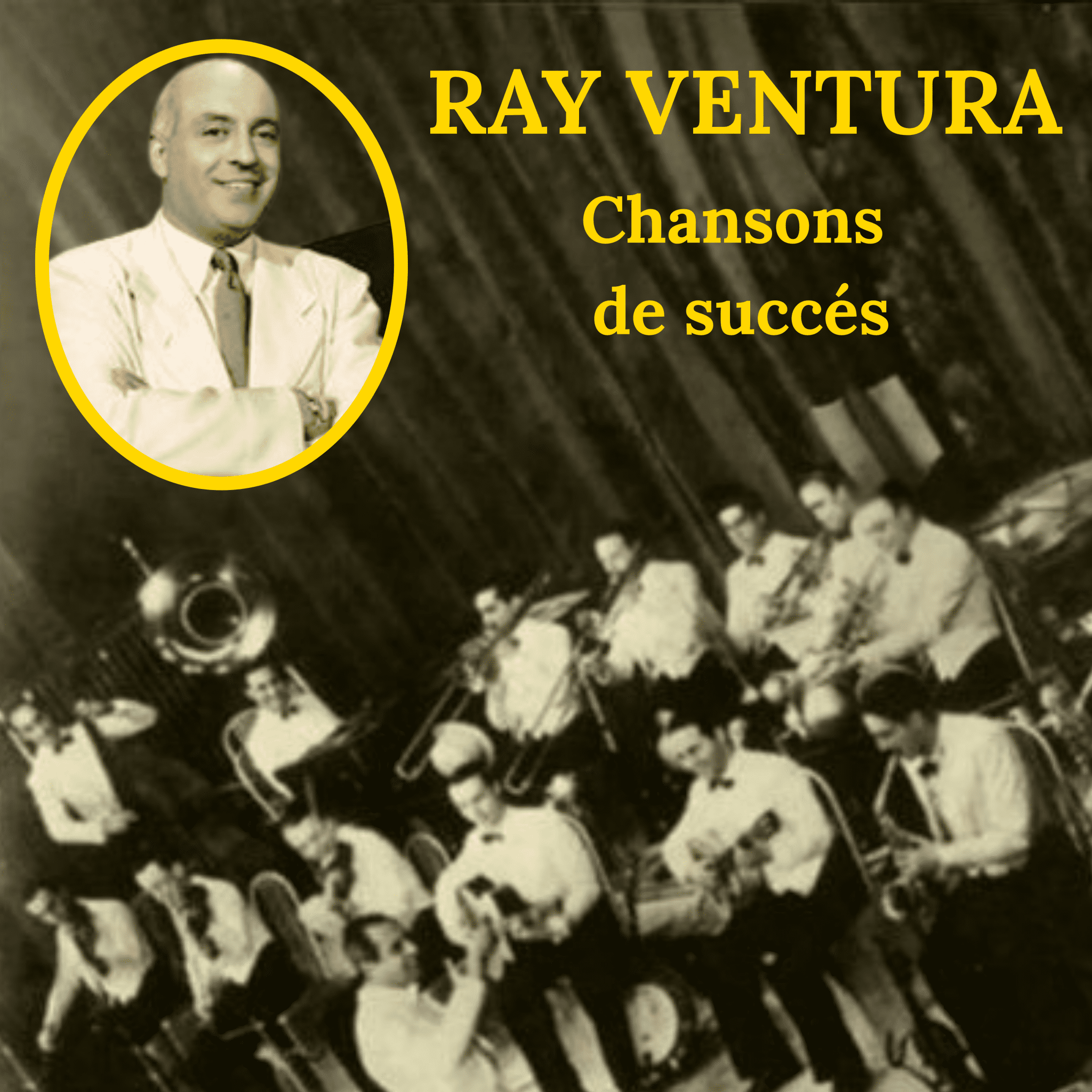




RAY VENTURA: Chansons de succès
1 sold in last 35 hours
Hurry! Over 1 people have this in their carts
... people are viewing this right now
Compare
ABOUT RAY VENTURA Ray Ventura (1908-1979) was a renowned French pianist, arranger and bandleader. By the mid-1930s, Ray Ventura et ses Collégiens had invented something uniquely French: a swing orchestra that laughed at itself while playing with razor-sharp precision. Drawing inspiration from American jazz, operetta, vaudeville, and radio comedy, Ventura and his rotating band of musicians, singers, and comic performers created songs that were irresistibly catchy — and quietly subversive. These recordings, made between 1935 and the outbreak of World War II, capture them at their height. The music swings lightly but insistently; the arrangements are tight, economical, and full of surprise; the lyrics unfold like miniature plays, often beginning in cheerfulness and ending in absurdity or polite catastrophe. Few ensembles before or since have fused humor and musicianship so seamlessly. What gives these performances their lasting power is that the comedy never undercuts the music. Ventura’s piano anchors the ensemble with clarity and elegance, while the brass and reeds deliver crisp, dance-ready swing. Voices move fluidly between singing, speaking, and collective commentary, turning each song into a shared wink with the listener. In an era shadowed by political uncertainty, Ray Ventura et ses Collégiens offered something rare: joy without naïveté, laughter without cruelty, and sophistication without pretension. Nearly a century later, these songs reflect a musical era that was fresh, inventive, and charming — proof that wit, when paired with musical intelligence, never goes out of style. These recordings capture a uniquely vibrant moment in French cultural history — when swing, satire, and sophistication converged just before Europe was transformed by war. This documents not only musical excellence but a vanished world of wit, elegance, and collective joy. SONG SELECTIONS Ça vaut mieux que d’attraper la scarlatina (It’s better than catching scarlet fever) Absurdist humor at its best — a ridiculous premise elevated by clever lyric pacing and buoyant orchestration. C’est idiot mais, c’est marrant (It’s silly, but it’s funny) Joyfully self-aware nonsense, celebrating the simple pleasure of laughing at things that make no logical sense. Tout va très bien, madame la marquise (Everything is fine, Madame la Marquise) The Collégiens’ signature masterpiece: a polite cascade of escalating disasters delivered with deadpan cheer and impeccable ensemble timing. Qu’est-ce qu’on attend pour être heureux? (What are we waiting for to be happy?) A buoyant anthem of collective optimism, built on call-and-response vocals and a gently swinging pulse that feels both carefree and knowing. Tiens, tiens, tiens! (Well, well, well!) A playful musical shrug — short, conversational phrases punctuated by rhythmic surprises and comic timing. Le Nez de Cléopâtre (Cleopatra’s nose) Historical satire meets swing, playfully exaggerating the idea that tiny details can change the course of history. C’est toujours ça de pris (That’s something, at least) A cheerful acceptance of small victories, delivered with light swing and conversational warmth. Comme tout le monde (Like everyone else) A sly meditation on conformity, framed as an easygoing swing tune that disguises its social bite behind charm. Vous permettez que j’déballe mes outils (Would you allow me to unpack my tools?) Comic anticipation builds as spoken phrases unfold like a carefully timed routine. Les Moines de la Saint-Bernardin (The Monks of Saint Bernardin) Playful parody tinged with faux solemnity, balanced by light swing and ensemble vocals. Chez moi (At my house) A moment of intimacy and warmth, balancing humor with genuine affection for familiar comforts. Les chemises de l’archiduchesse (The Archduchess’s shirts) A virtuoso tongue-twister set to music, showcasing the Collégiens’ precision, diction, and comic agility. Le chef n’aime pas la musique (The boss doesn’t like music) A deliciously ironic scenario where the joy of music clashes with rigid authority. Le Refrain des chevaux de bois (The Refrain of the Wooden Horses) Circular melodies mirror the spinning carousel imagery, creating a gently hypnotic effect. Le général dort debout (The general sleeps standing up) Military authority punctured by absurdity, delivered with mock seriousness and impeccable ensemble timing. La musique vient par ici (The music is coming this way) A celebratory invitation, reinforcing music as a unifying, irresistible force. Les trois mandarins (The three Mandarins) Exoticism filtered through French humor, typical of the period’s playful imagination. Tchin kong (a play on the words King Kong) Pure rhythmic fun — phonetics and groove take center stage. Vive les bananes (Hooray for bananas!) A joyful finale celebrating silliness for its own sake, ending the program with infectious good humor. Historical Timeline: Ray Ventura et ses Collégiens 1908 – Ray Ventura is born Raymond Ventura in Paris. Trained as a pianist, he is exposed early to both classical music and the emerging sounds of American jazz. 1929 – Ventura forms Ray Ventura et ses Collégiens, originally conceived as a lighthearted student-style ensemble blending jazz rhythms, popular song, and theatrical humor. Early 1930s – The Collégiens gain national recognition through radio broadcasts, stage revues, and recordings, standing apart from traditional orchestras through spoken vocals, ensemble comedy, and tightly arranged swing. 1935 – Breakthrough year. The group records Tout va très bien, madame la marquise, which becomes one of the most iconic songs in French popular music. The Collégiens are now fixtures of radio, cinema, and popular culture. 1936–1938 – Peak period of creativity and popularity. The ensemble appears in films, tours extensively, and records many of the titles featured on this album, refining their signature blend of swing, satire, and chanson. 1939 – The outbreak of World War II abruptly interrupts the Collégiens’ activities. Several members leave France, effectively ending the group’s classic era. Post-war legacy – Though the original ensemble never fully reforms, Ray Ventura’s influence remains profound. His work shapes postwar French chanson, musical comedy, and the integration of jazz into popular French song.